If you find yourself in Fitzrovia, London Bridge or Old Street in need of brunch or coffee at any time of the day, Lantana is there for you.
Started in 2008 by Shelagh Ryan, the purpose of Lantana was to bring Australia’s all-day brunch culture to the big smoke. 18 years, 3 restaurants, a catering company and a revamped Westminster institution (Old Queen Street Café) later, Lantana is an institution that keeps delivering fresh Australian flavours to Londoners every day.
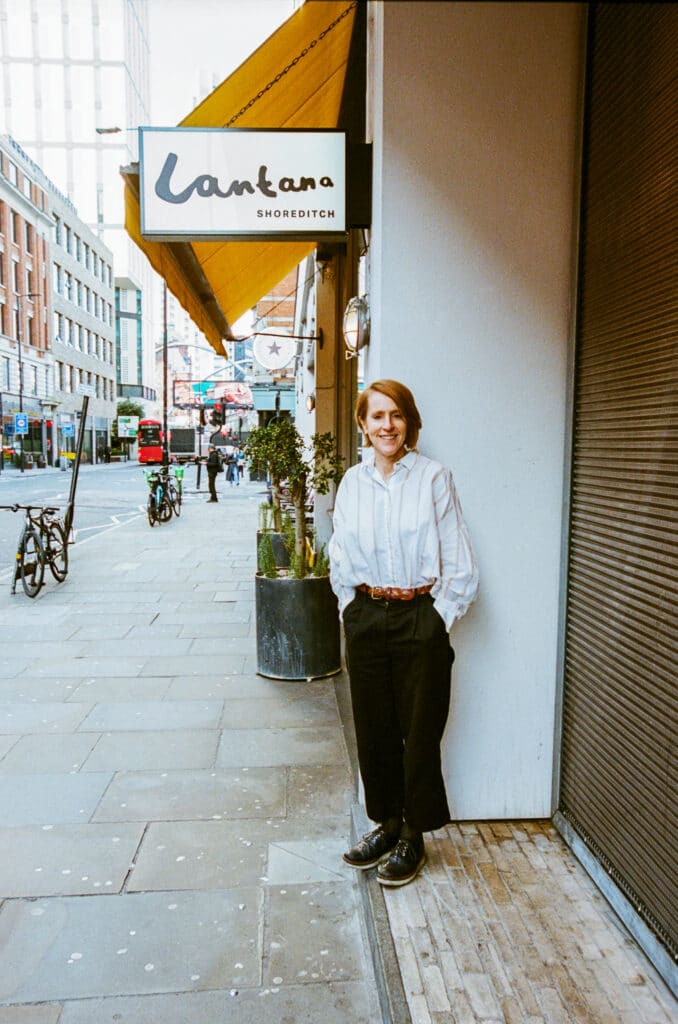
We sat down with Shelagh Ryan in Lantana Shoreditch to look back on the last 18 years, talk Australian food and fresh ingredients.
Tristan Benhamou: You started Lantana 18 years ago to meet a need for Australian coffee culture in London?
Shelagh Ryan: Yeah, so Fitzrovia was our first site, and then here [Shoreditch] was our second site, and we’ve got another Lantana in London Bridge, and we’ve also got some corporate catering accounts as well.
There was a real gap in the market here. In Australia, people eat out for brunch, particularly on the weekends. It’s a really highly competitive market in Australia. The quality is fantastic, and we found that in London, it was the chain stores were dominating the high street, and, obviously, you could eat well for dinner, but we found that the lunch and breakfast market was really crying out for something different. That was in 2008, it was very different now, we’ve got a lot of competition. But, yes, I think it’s great, because it just means also more people are coming out for breakfast and lunch, and in that casual dining space. You’re not grabbing a sandwich on the go; people are now sort of quite happy to sit down and have a proper meal at lunchtime and treat it with the respect it deserves.
TB: What makes Australian brunch, all-day dining culture different from what was already in Europe?
SR: The thing about Australian cuisine is that it’s influenced by its multicultural demographic. Its population had waves of immigrants come from, particularly from Southeast Asia, Lebanon, Turkey, Greece. So that definitely informs the cuisine there, and the climate. It’s a hot climate. So, there’s lots of salad. Dishes are very heavily influenced by Southeast Asia, but also by just the fantastic herbs in salads, and lots of grilled meats, and light dishes, rather than slow cooked dishes, I would say, is part of the DNA of Australians.
They love, you know, putting something on the barbecue and having a salad with it. At Lantana, people often say, ‘Oh, it’s quite a healthy menu.’ I haven’t intentionally set out to create a healthy menu, it’s just the type of food I like eating and the type of food Australians like eating.

TB: Including Old Queen Street Café, how many sites do you have?
SR: So, we’ve got six head chefs. I like to think of it that way.
We’ve got some restaurants inside office buildings, where we just cater for the office staff, and then we’ve got the restaurants, and, yeah, a co-venture with a member’s club, which is the Old Queen Street Café.
TB: From one café to six head chefs, how would you say that the Lantana brand has evolved through the years?
SR: Oh, good question. I actually think that the thing that’s special about Lantana is that we haven’t grown so big that we can’t keep our arms around it. I always say, I like to be able to cycle to all the restaurants and really be very involved in the quality and the plates of food. The consistency of the plates of food we put out. So, I think what’s nice about Lantana is it hasn’t grown so big that we’ve had to dumb it down.
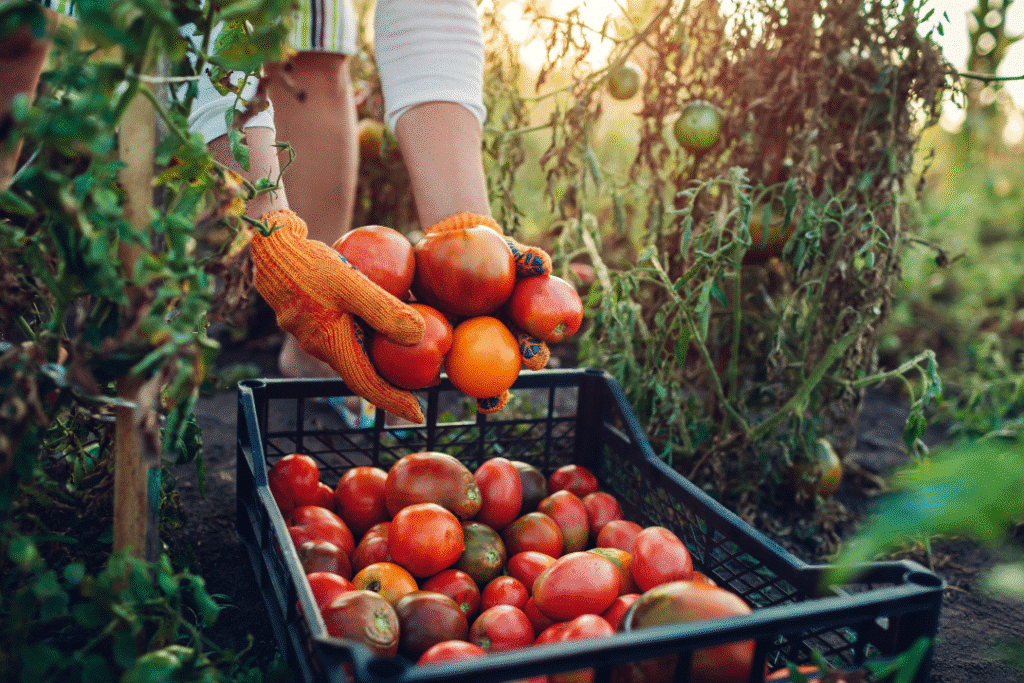
You can replicate it multiple times. It’s still very much reliant on the quality of the ingredients, because, as I always say, the food we’re putting out is quite simple. So, the ingredients really must be incredible because we’re not doing that much to them.
It’s not ultra processed. It’s very much: ingredients on a plate with some interesting sauces and crunches, and we’re always playing with the textures in a dish. Like this dish for example, you know, there’s something with crunch, there’s something raw, there’s something pickled, there’s something cooked.
I think fundamentally, it hasn’t changed that much over the years, other than obviously, we’re always developing.

TB: Produce being a key aspect of every dish at Lantana leads me to my next question, what’s special about relying on All Greens for all your greens across the different sites?
SR: I think what is special is, you can tell people who are passionate about what they’re doing. Like, Rhys is a former chef. I think that really comes across when he talks about the ingredients. He’s not just selling a product. He’s selling the end result, which gives the customer a great experience, giving the chef something that they feel really proud of.
There’s nothing worse than getting delivered something, and you’re like, ‘Oh, my God, you know, this isn’t up to standard, or this isn’t what I ordered, and what am I going to do with this?’
With All Greens, you know, that they care about the customer, because it’s not a massive company that’s just supplying loads of different brands. I believe that All Greens cares about who they work with, and they’re not just working with anyone, they’re working with people who share their commitment to quality and share their passion. And I do feel like you can see that All Greens is run by people who care about food quality.

TB: What’s next for Lantana?
SR: Survival. I feel like every year, I’m just really grateful to still be here, still be doing what we’re doing. Every year there seems to be some new thing thrown at us. So, I’m hopeful that, you know, the industry has hit rock bottom, and it’s now all just gonna get better.