Where is Slowburn?
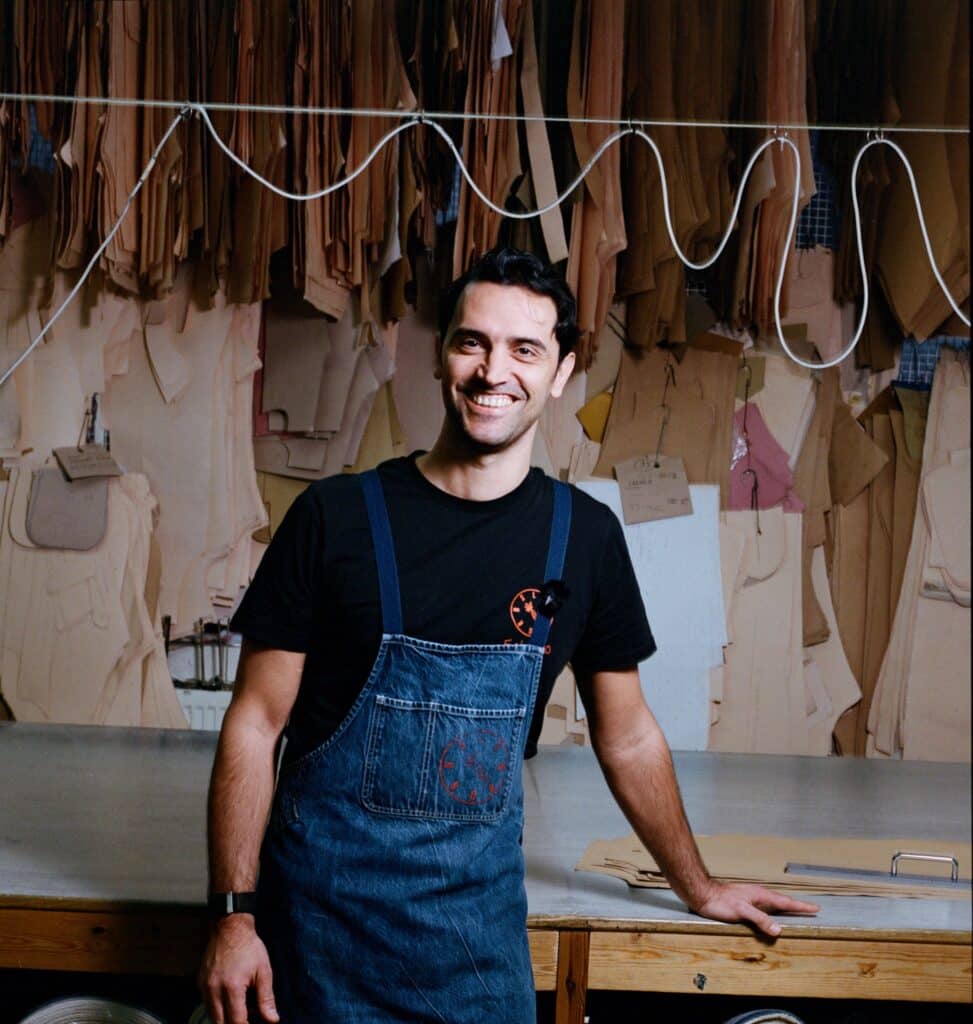
In the middle of an industrial estate in Walthamstow, next to a petrol station, you’ll find a denim factory. In the middle of this denim factory, you’ll find Slowburn. Opened five years ago by Bulgarian chef Chavdar Todorov, the vegetable-centred restaurant has unusual quarters. We came in on a Thursday morning, a day when the restaurant is closed, but we found Chavdar and his team hard at work, prepping for the fully booked weekend ahead. Whilst cooks are slicing, peeling, and boiling away, workers in the denim factory are hard at work making jeans and jackets, all with a touch of London flair.
We sat down with Chavdar at a long wooden table in the middle of the factory to chat about his experience running his first restaurant.
The Interview:
Tristan Benhamou: Chavdar, you started Slowburn five years ago. How did you first get into the kitchen?
Chavdar Todorov: I remember the first cookbook I bought was when I was six or seven years old. I was cooking a lot with my mum. Well, not actually with my mum. She was very busy, so because she couldn’t do it, I handled the cooking for myself. This is where it all started. Your parents work too much to provide, and then you find yourself cooking. I’m from Bulgaria, so this was back there.
One day, I started working in a kitchen and in front of house at two different locations. I started at 8am cooking, then travelling around and doing service, then coming back and cooking some more. It was an Italian restaurant, a really good restaurant actually, back in Bulgaria. I only spent maybe six or eight months working there.
Then I went to Scotland and spent two years on a private island called Eriska. After that, I went down to Marlow, working in a couple of Michelin-star restaurants. Then London in 2012.
A lot of restaurants, corporate catering, a lot of stuff really. Then around 2016, I started working for myself, doing little pop-ups. I started working with a venue called The Vaults near Waterloo. We were doing a lot of corporate events there. We had a pub at some point. I had four different teams working. We were catering events, immersive dining shows.

That was a lot of intense experience with big numbers, and then the pandemic hit. That’s when we came to the factory. I got in touch with Han, who owns the factory and the denim business. I knew there was a kitchen here that we could use, and I was like, “Hey, is someone using it?” No. Okay, let’s start doing something.
This was the beginning of Slowburn, without a real long-term plan. We started with a collection-only takeaway. As you can see, it’s an industrial area, no shop front. We made people come into a factory to collect food. Without a real long-term plan, but people seemed to like what we were doing in the beginning, focusing on vegetables. Then it kind of snowballed.
With me saying that I never wanted to do a restaurant, I ended up doing a restaurant.
We’ve been doing it for five years now, only open on weekends. It’s a little unusual. When we started, people thought it was crazy. Making people come and collect food without a shop front, in an industrial area. Then we turned it into a restaurant, which was even more unexpected.
TB: I’d imagine starting in 2020 was probably the worst timing.
CT: It was the worst, but like many other places, it created opportunities. A lot of people living around here just wanted something. Everybody was working from home, there weren’t many options. People were happy to see something new happening. Everybody was on board. Without the support of the local community, we wouldn’t be here.
TB: You said you never thought you’d want to start a restaurant. Can you elaborate?
CT: I didn’t want to because when you work in restaurants, you see how demanding it is and how much it takes from your life. You don’t see your friends, you’re not able to create a family, or sustain relationships. In that sense, I didn’t want to do it. I didn’t have a dream of opening a restaurant.
It just happened. Now there are 50 people working here. Don’t get me wrong, there’s a lot of satisfaction. Seeing people enjoy what we do and getting that feedback is very rewarding.
From the factory floor, you can observe the kitchen at work through a window. While we’re having this conversation, the smell of red onions on the flat top overwhelms the senses.

TB: So you started Slowburn here five years ago. How has it been for you, running your own restaurant and being at the helm?
CT: Great. There’s a lot you learn along the way. Managing people is one of those things. You’re in a situation where a lot of people are looking to you for answers. You have to learn how to handle that.
One thing you learn quickly is not to stretch yourself too thin. Learn to let go, try to delegate more. These are lessons you start learning and putting into practice. Rely on the people around you and trust them more.
Next to us, the head denim designers of the Blackhorse Lane denim factory are cutting patterns and debating measurements, while employees further away are sewing.
TB: You mentioned earlier that you focus on vegetables. Why is that?
CT: Because I think that’s what we should be doing. We should reduce the amount of meat we’re eating. When we talk about sustainability, renewable energy, and diversity, everything has to work together.
It’s also more challenging. Doing something interesting with vegetables is harder.
Originally, we were going to do smoked meats only. That’s part of why it’s called Slowburn. But two weeks into developing the concept, I realised I wasn’t comfortable with it being meat-heavy if it went somewhere. That’s when we flipped it and decided to focus on vegetables, even though it’s harder.
The other reason is inclusivity. You go to restaurants and there’s one vegetarian or vegan dish. If you go to a vegetarian restaurant, there isn’t a meat dish. We want a place where no one compromises. The menu is for everybody. Four or five people with different requirements can come in, and no one needs to compromise.

TB: How would you say your relationship with your greengrocer, like All Greens, affects your creativity?
CT: We work closely with all our suppliers. We change suppliers with the seasons and see what’s best. Everything starts in the field where it’s grown. If we don’t get the best produce, your dishes are only ever going to be as good as the ingredients. We talk with our suppliers a lot and see what’s best.
After the interview, Chavdar heads off to grab leeks, pots, and a small induction hob. He’s about to cook a brown butter and harissa charred leek dish for us to try, with the recipe coming soon on All Greens social media. Even though they’re not opening that day, the whole kitchen team works with a methodical sense of urgency, getting ready for the busy weekend ahead.

If you want to book a table get in contact with Slowburn, via their website! https://www.slowburn.london/
To see out other interviews with chefs, check out our linktree! linktr.ee/allgreenswholesale